

April 2, 2026
Child Development
Signs your child is overstimulated, and what it really means
What does overstimulation mean in toddlers?
Overstimulation happens when a child is exposed to more sensory input than they can comfortably process.
This can come from: screens, noise, busy environments, too many activities, or fast-paced content.
A toddler’s brain is still developing the ability to filter, organize, and respond to information. When there is too much happening, the system becomes overwhelmed. And that overwhelm needs to go somewhere.
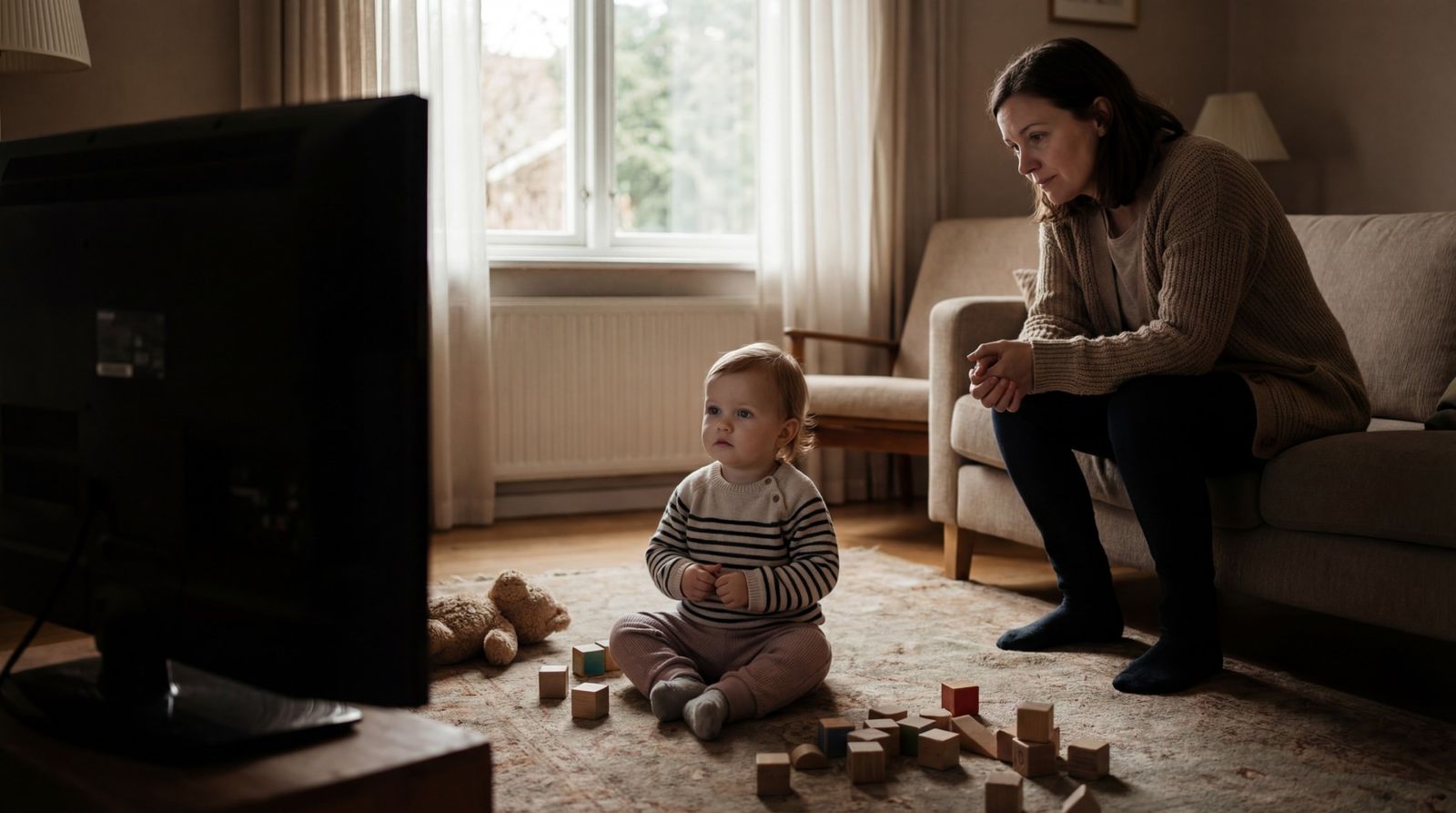
Common signs your child is overstimulated
Every child is different, but there are some clear patterns that parents often notice. These are not random behaviors. They are signals.
1. Irritability after screen time
Your child seems fine while watching, but becomes easily upset afterwards. This is one of the most common signs. The nervous system has been highly activated—and when the stimulation stops, it struggles to settle.
2. Difficulty transitioning between activities
Turning off the TV, leaving a place, or changing routines becomes a challenge. The child may resist, cry, or react strongly to what seems like a small change.
3. Increased restlessness or hyperactivity
More movement than usual. Difficulty sitting still. Jumping from one activity to another. This is not excess energy; it’s often the opposite: a system that can’t regulate itself.
4. Trouble focusing on calm activities
Books, quiet play, or slower experiences suddenly feel “boring.” After fast-paced stimulation, the brain expects more intensity.
5. Changes in sleep patterns
Overstimulation can make it harder for children to wind down. You may notice: difficulty falling asleep, more night waking or restless sleep.
Why does overstimulation happen more often today
Children today are growing up in an environment full of constant input.
Screens autoplay, sounds overlap, content moves quickly or activities fill the day. Much of modern children’s media is designed to capture attention, not to support regulation.
This creates a mismatch: a developing brain… in a high-speed environment.
Fast content vs. low stimulation cartoons
Not all content affects children in the same way.
Fast-paced cartoons often include: rapid scene changes, intense colors, constant movement, or continuous sound. These features are highly engaging, but also demanding.
In contrast, low stimulation cartoons offer: slower pacing, fewer simultaneous stimuli, clearer visual focus, and more natural rhythm.
This kind of content allows the child to stay present without becoming overwhelmed.
What does overstimulation really mean
Overstimulation is not just about behavior. It’s about regulation. An overstimulated child is not choosing to react strongly. They are struggling to process what they have experienced. Their brain is still “busy,” even when the activity has stopped. That’s why reactions often come after the stimulation, not during it.
Understanding this changes everything; it shifts the perspective from “why are they behaving like this?” to “what might their system still be processing?”
How does overstimulation affect attention and development
When overstimulation becomes frequent, it can impact: the attention span, the emotional regulation, the Sleep quality, or the Ability to engage in slower activities
Children may begin to rely on high levels of stimulation to stay engaged. Which makes everyday experiences feel less interesting.
This is why kids’ attention span development is closely linked to the type of content they consume.
Emotional development through regulation
Children learn about emotions by experiencing them and by having time to process them. When stimulation is constant, emotions become compressed. They are felt, but not understood.
Reducing overstimulation helps support emotional development through stories and daily experiences by allowing emotions to unfold, giving time for reflection, and supporting self-regulation
A different approach: from stimulation to calm
Managing overstimulation is not about removing everything. It’s about balance. Small changes can make a big difference: reducing fast-paced content, introducing calmer routines, creating moments of quiet, or allowing time between activities.
Projects like Pepol’s Universe are built with this philosophy in mind.
Instead of overwhelming children, Pepol offers a calm visual and narrative experience. Its beautifully designed world invites observation, helping children stay engaged without overload. It creates space. And that space matters.
Sometimes, what they need most is not more input. But less.